PRECISION FILTERING FOR ADVANCED OPTICAL SYSTEMS
Optical bandpass filters are essential components in imaging, sensing, and analytical systems. They allow only a defined range of wavelengths to pass while blocking all others to enhance image contrast, improve signal-to-noise ratio, and protect sensors from unwanted radiation. For engineers, selecting the right bandpass filter is about achieving optical precision, mechanical durability, and system stability across temperature and environmental conditions.
JNS Glass & Coatings has experience supplying high-performance optical filters for industries ranging from machine vision and life sciences to remote sensing and defense. In this guide, we’ll explore the different filter types used across different industries and how JNS’s technical capabilities and turnkey filters make us a trusted supplier for precision optical components.
WHAT ARE OPTICAL BANDPASS FILTERS?
Optical bandpass filters transmit light within a specific wavelength range (the passband) and block light outside that range (the stopband). This selective transmission isolates useful signals while rejecting background noise or interference, enhancing the clarity and performance of optical systems.
Bandpass filters can be further optimized to maintain spectral performance at wider angles of incidence and thus avoid the wavelength shift that affects lower-quality filters. All filters are available in a range of substrates, including SCHOTT BoroFloat® borosilicate, acrylic, and Corning® Gorilla® Glass, for rugged or lightweight applications.
Types of Bandpass Filters from JNS Glass & Coatings
JNS offers a complete line of bandpass and complementary optical filters designed to meet specific wavelength, performance, and durability requirements.


- Visible Bandpass Filters
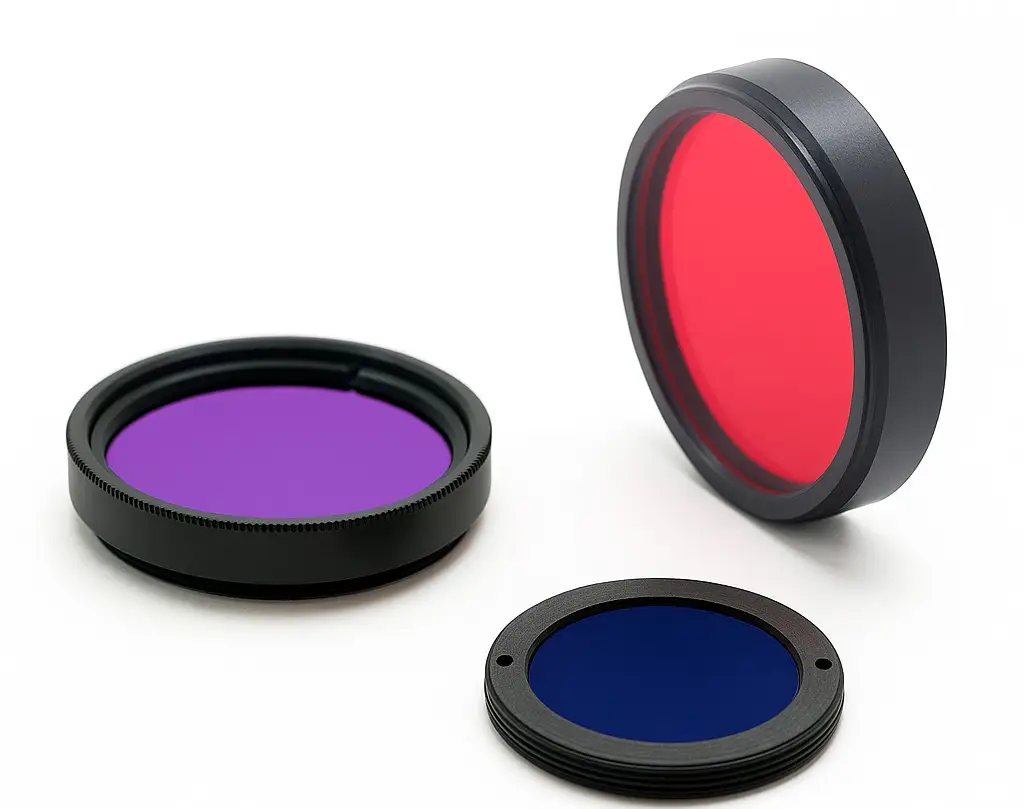
Other useful features of Visible Bandpass filters include:
- Peak transmission of 85% of 98% with excellent out-of-band blocking
- Double-side polished substrates ensure parallelism and optical flatness
- Hard-coated, single-substrate design for durability and temperature stability
Visible Bandpass filters from JNS feature anti-reflection coatings for maximum transmission and exceptional surface quality for robustness and clarity. They are available in threaded mounts, C-mounts, slip mounts, or unmounted formats and can be customized to adapt to different industrial imaging applications.
Applications of Visible Bandpass Filters
Visible Bandpass filters are able to maintain their performance across different environments, from indoor labs to demanding outdoor settings. Their uses include:
- Machine vision and general factory automation systems
- Security and surveillance systems, such as license plate recognition cameras
- Fluorescence imaging and laser analysis systems
- Outdoor imaging where a high degree of ambient light (sunlight) is present
At JNS, our Visible Bandpass filters are manufactured in a range of sizes to fit each application, with the ability to meet custom parameters regarding the shape, bandpass position and width, blocking level and range, and the substrate.
- NIR and Dual Bandpass Filters
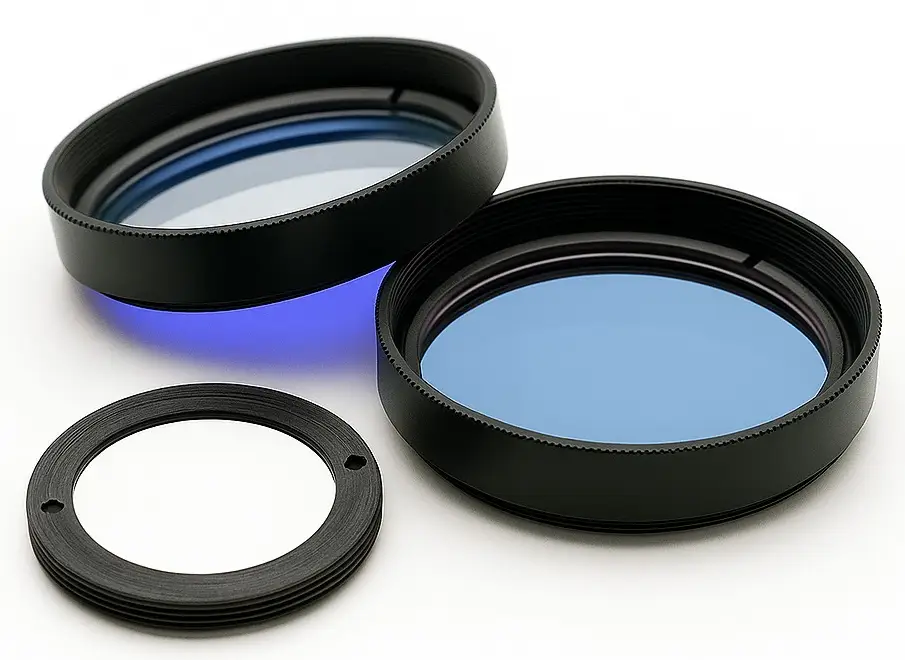
Both NIR and Dual Bandpass filters are used to achieve accurate color rendition and can include anti-reflection coatings for maximum throughput. Dual Bandpass filters offer additional beneficial features, including:
- Rejection of interfering wavelengths (out-of-band blocking) for optimal contrast, improved system control, and stability
- Enabling more compact and efficient systems in space-constrained applications
- Hard-coated, single-substrate design with 40/20 scratch-dig surface quality
Applications of NIR and Dual Bandpass Filters
JNS offers both NIR and Dual Bandpass filters with anti-reflection coatings for maximum transmission. These can be optimized for day/night operation and low-light environments, including:
- Day/night surveillance and Intelligent Traffic Solutions (ITS)
- NDVI imaging for precision agriculture and drone platforms
- NIR spectroscopy and industrial chemical analysis
- Machine vision inspection and defect detection
- Biomedical fluorescence and diagnostic imaging
- UV Bandpass Filters
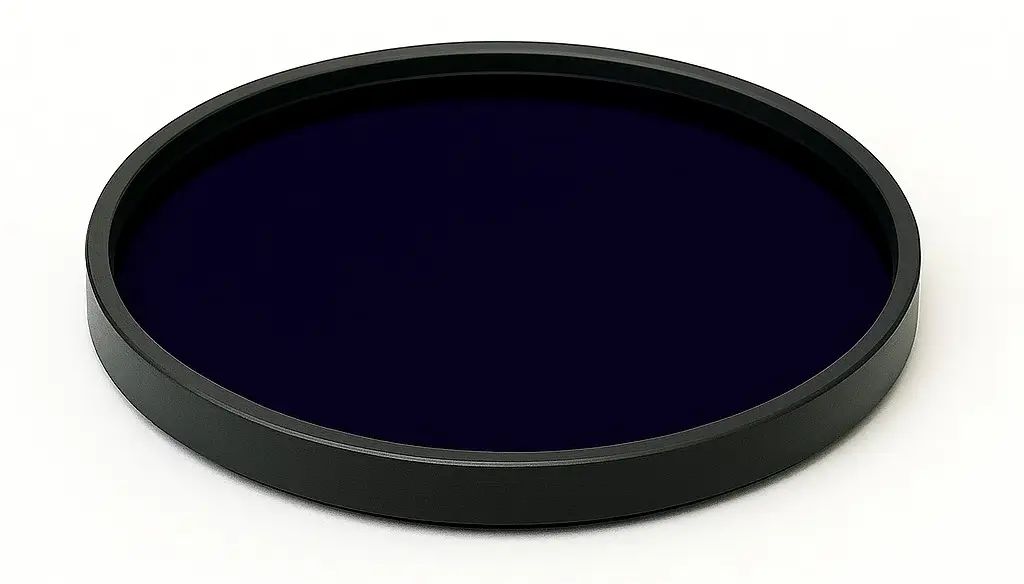
JNS UV filters are optimized for stability, durability, and precise wavelength isolation. Other key features they offer include:
- Specific UV transmission window with high out-of-band blocking
- Anti-reflection (AR) coating for maximum UV throughput
- Hard-coated construction with 40/20 scratch-dig surface quality
- Compatible with threaded or unmounted configurations for easy integration
Applications of UV Bandpass Filters
UV filters from JNS are frequently chosen for their ability to maintain optical clarity and spectral performance even under high-energy UV exposure. They can be used in various laser systems, fluorescence imaging, and optical systems with custom requirements, including:
- PCR and life science diagnostic instruments
- Semiconductor and surface inspection
- Forensic imaging, UV curing, and sterilization systems
- UV fluorescence and DNA analysis
- Shortpass Filters (IR-Cut / Visible-Pass)
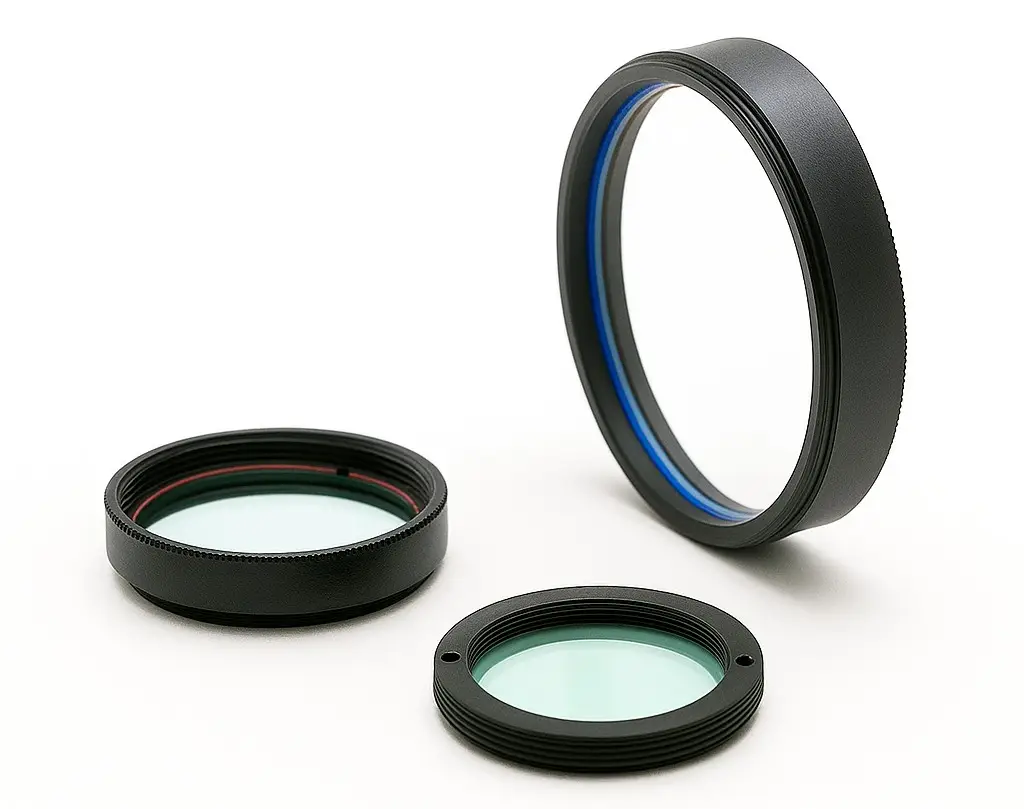
These filters play a vital role in image fidelity, with features such as:
- Sharp transition between transmitted and blocked wavelengths
- Durable dielectric coatings for stability in harsh conditions
- Reflective characteristics in high-intensity illumination setups
Shortpass filters are often designed for use at specific angles of incidence for optimal performance and can also be paired with longpass filters to create a custom bandpass window.
Applications of Shortpass Filters
JNS’s Shortpass filters are engineered for repeatable optical performance in high-intensity and thermal environments. They are suitable for use in the following areas:
- Digital cameras and machine vision color correction
- Fluorescence excitation and spectroscopy
- Projection systems and thermal management (hot mirrors)
Shortpass filters are available in a wide range of sizes and mounts, with the ability to further customize to specific requirements.
- Longpass Filters
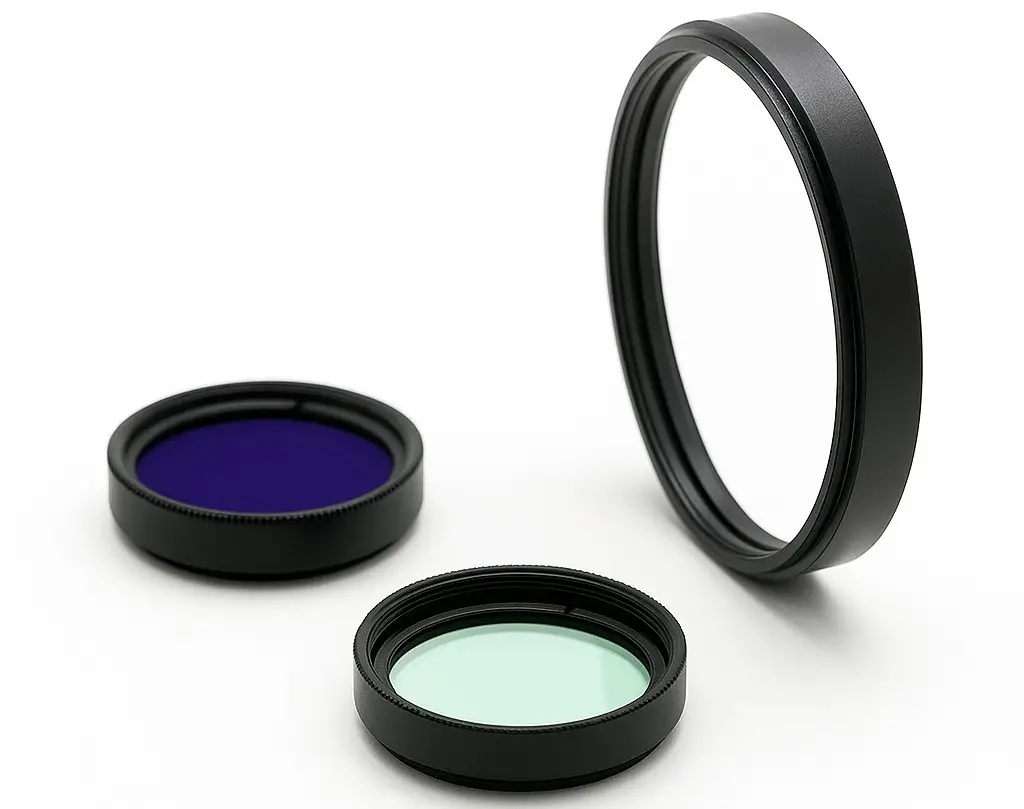
Longpass filters from JNS provide a seamless transition from reflection to transmission, with features that can include:
- Double-side polished for optical flatness and 40/20 scratch-dig surface quality
- AR coatings for maximum transmission
- Oleophobic coatings available for scratch resistance and cleanability
- Wide range of cutoff wavelengths and customization options
Applications of Longpass Filters
Longpass filters from JNS are used in various sectors, from industrial cameras and LCD covers to autonomous vehicles and thermal applications:
- Protective windows for cameras, sensors, and optics exposed to harsh conditions
- Fluorescence emission filtering and spectroscopy
- Laser light control and thermal management
- Multispectral and hyperspectral imaging systems
A number of mounting options are available, including threaded, C-Mount, slip mounts, and custom sizes.
Choosing the Right Bandpass Filter
Engineers evaluating filters often balance spectral performance, cost, and mechanical durability. Key parameters to consider when selecting and specifying a bandpass optical filter include:
- Center wavelength (CWL), bandwidth (FWHM), and cutoff frequencies
- Peak transmission and out-of-band optical density (OD)
- Stability across temperature and wide angles of incidence
- Surface quality, size, and parallelism
- Mounting method and substrate material
JNS filters are manufactured on BoroFloat®, acrylic, and Gorilla® Glass substrates and can be coated with AR, VHB adhesive, oleophobic, and protective films to meet demanding environments ranging from cleanroom instrumentation to outdoor imaging systems.
Why Engineers Choose JNS
With decades of experience supporting optical design engineers and OEMs, JNS Glass & Coatings has earned a reputation for precision, reliability, and collaboration. The following advantages demonstrate why customers turn to JNS for critical optical components:

Comprehensive Capabilities
JNS provides turnkey filter solutions—including glass selection, coating, glass fabrication, mounting, and testing—to meet exacting specifications.

Rapid Sampling and Production
Prototype samples ship within 1–2 days, and custom production is typically completed in 3–4 weeks.

Durability and Consistency
Filters are engineered to be less angle-sensitive than comparable filters on the market, and exhibit superior out-of-band blocking and rugged environmental performance.

Engineering Support and Testing
JNS maintains Cary and Shimadzu spectrophotometers capable of measuring hundreds of parts at once. Each part is supplied with a complete transmission and reflection scan.

U.S.-based Manufacturing and Responsiveness
JNS is known for our fast lead times, cost competitiveness, and willingness to sample. Our engineering team is ready to support customers and offer guidance on design optimization.
PARTNER WITH JNS GLASS & COATINGS
Whether you need a single prototype, a custom optical filter assembly, or a large production run, JNS delivers precision, consistency, and speed. With decades of expertise in optical coatings, filter fabrication, and integrated assembly, JNS is the go-to supplier for engineers who need reliable spectral solutions that perform in demanding environments.
Contact JNS Glass & Coatings to discuss your next optical challenge or request a quote today.